
Intent
At Shillingstone Primary School, the teaching of writing is of paramount importance within a broad and balanced curriculum. We intend for our children to leave as confident, capable and independent writers, who not only understand the purpose and importance of writing but also enjoy the writing process.
At Shillingstone Primary school, we work hard to:
- create confident writers who develop stamina for writing throughout school and are able to write at length
- support all of our children in becoming independent writers, building on a range of skills as they work through each journey of writing
- expose all pupils to high quality texts that model excellent writing practises across a broad range of genres
- ensure that children have a secure understanding of the purpose of a text type, the purpose and intended impact of writing skills/tools and the ability to carefully select vocabulary with focus on the desired effect on the readers’ thoughts and feelings so that the impact of their writing is positive
- ensure that all pupils know how to plan, practise, evaluate their work as well as carry out an effective edit and improvement process using feedback from the teacher
- challenge pupils and encourage them to take risks and view mistakes as a positive part of the learning process
- celebrate writing at each stage through the learning process to encourage children to take pride in their work
- provide a balanced and broad curriculum, which encompasses writing practice and equips children with the skills and knowledge of writing processes including handwriting, spelling, grammar, widening vocabulary and writing for different styles
- ensure that we are inclusive of all children, including SEND by providing the appropriate scaffolding, support and writing tools those children need in their writing process to experience success
- encourage our pupils to have high expectations of themselves where they take pride in all aspects of learning and in everything they produce
Implementation
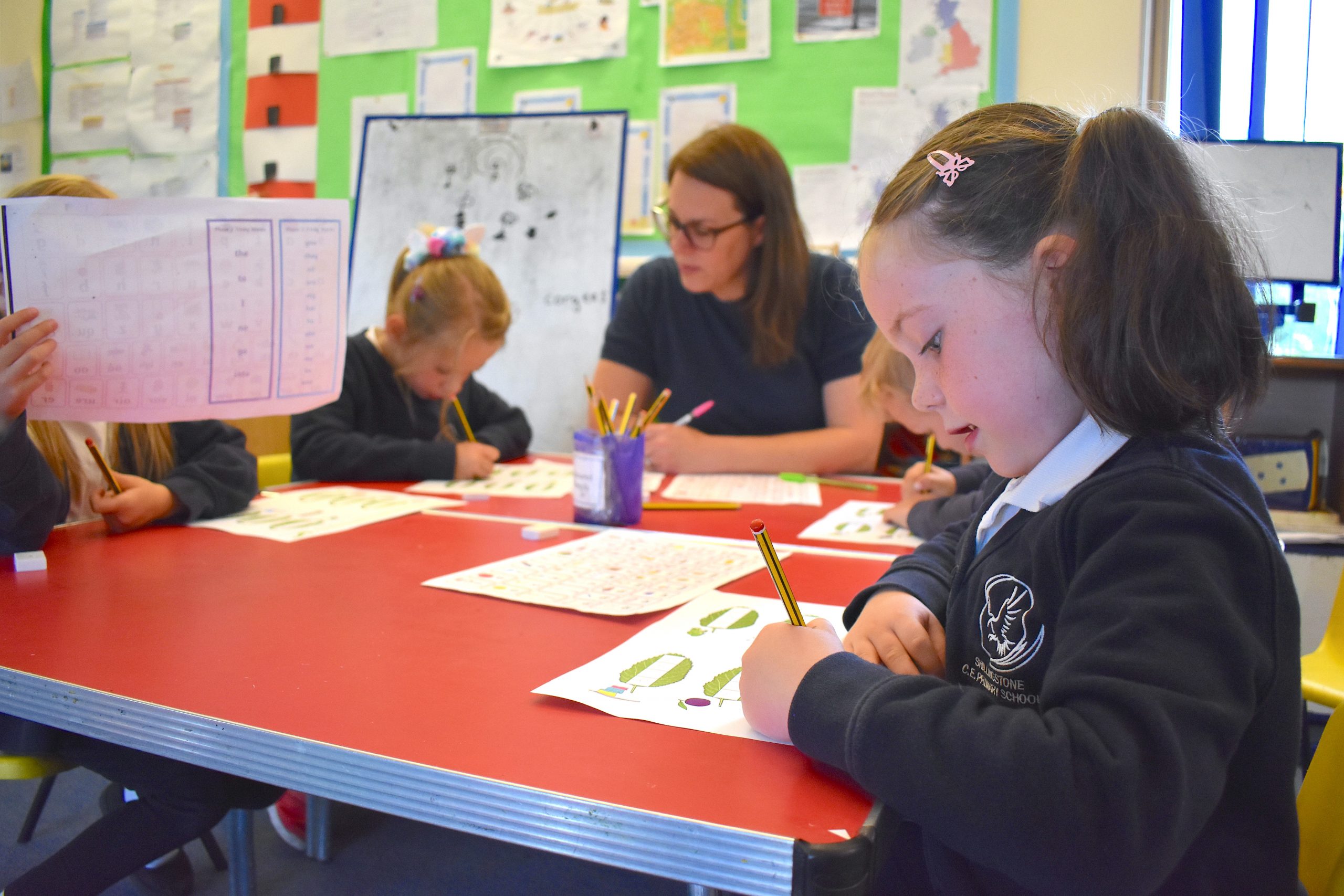
To enable our children to write effectively and coherently we teach Writing using ‘The Write Stuff’ approach by Jane Considine. This approach is used from Reception to Year 6 and allows children to apply basic skills, vocabulary and grammar knowledge to write effective sentences, which are full of impact and keep the reader interested. ‘The Write Stuff’ brings clarity to the mechanics of teaching writing. It is introduced though the ‘Writing Rainbow’, using the three zones of writing:
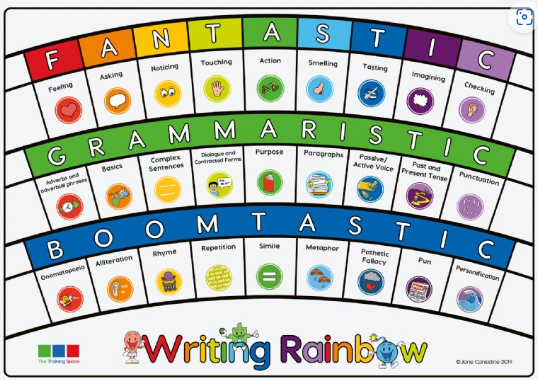
From ‘The Writing Rainbow’, symbols are used to support children within their writing journey and to ensure that all children can use them in context as they move through school.
As part of the teaching sequence, teachers plan experience days; sentence stacking lessons and independent writing sequences. Experience days immerse children in experiences linked to their writing and drench them in vocabulary linked to the lenses in ‘The Writing Rainbow’. From the experience days, children take part in the sentence stacking lessons. Sentence stacking lessons include effective demonstration writing from the teacher and the writing of three high-quality sentences with focuses on lenses of the rainbow. Children are also given the opportunity to ‘Deepen The Moment’ and add more to their writing using a lense of their choice. Independent writing sequences give children the opportunity to showcase everything they’ve learnt in their experience days and sentence stacking lessons.
Please click on the link below to view the units taught across the school.
Each half term, the children in Key Stage two will publish a piece of writing and it will be displayed in their classrooms or on display boards throughout the school. This allows every child to have a written piece of work on the walls which can be seen and celebrated by all.
Writing is also a key focus in the wider curriculum for example in topic lessons. Children are given the opportunity to transfer their skills and build upon their knowledge of a genre through other writing opportunities.
Spelling, Grammar and Punctuation
Pupils are taught discrete punctuation and grammar skills, appropriate to their year group, within their units of work. This allows opportunities to identify, practice and consolidate grammatical understanding, whilst also being immersed in a genre. Children then apply the grammar and punctuation skills that they have learnt in their extended pieces of writing.
Children in EYFS and Key Stage one follow the Twinkl Phonics scheme of work. Through this scheme of work, the children in Year 2 are taught spelling rules and grammatical techniques appropriate to their year group. (See our Reading and Phonics webpage for more information.) Children in Key Stage Two are taught spelling regularly in focused sessions. These lessons follow the Twinkl scheme of work. Please click below to read these overviews.
Children exploring spelling patterns using multi-sensory techniques
Each week, children are sent home a selection of these spellings to learn as part of their homework. They are then tested on these words in their weekly spelling test.
Impact
The children at Shillingstone enjoy writing and are enthusiastic during lessons. This is what some of our pupils think about writing.
“I used to find editing writing really hard but it is much easier now.”
“I really like the ‘chotting’ part of our writing lessons as it helps to share ideas with others.”
“I like to look at the writing wall in the classroom as I can see how much my writing has improved over the year.”
The children are really enjoying The Write Stuff and have already created some fantastic ‘Sentence Stacks’.
Children leave Shillingstone Primary School as confident writers, who have the key skills and knowledge necessary for the next stage of their learning. 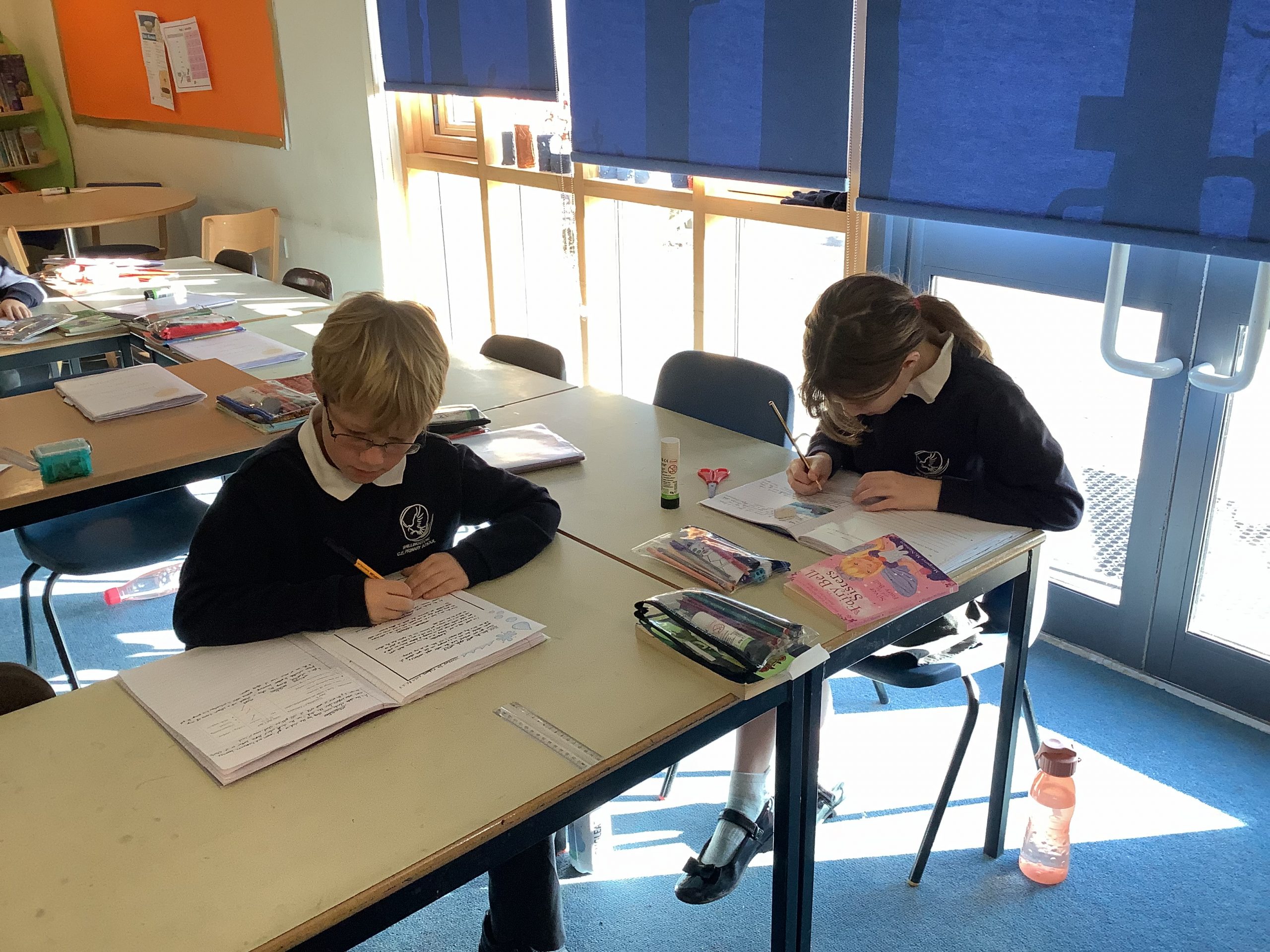
Assessment is an integral and continuous part of the teaching and learning process at Shillingstone Primary. Teachers integrate the use of formative assessment strategies such as: effective questioning, effective feedback and observing children participating in activities. At the end of each writing unit, teachers assess the children’s independent writing piece. Their pieces of writing are then displayed on a writing wall in the classroom.
During our parent assemblies, children really enjoy sharing their writing.
In this section
